

People don't take trips, trips take people.
—John Steinbeck
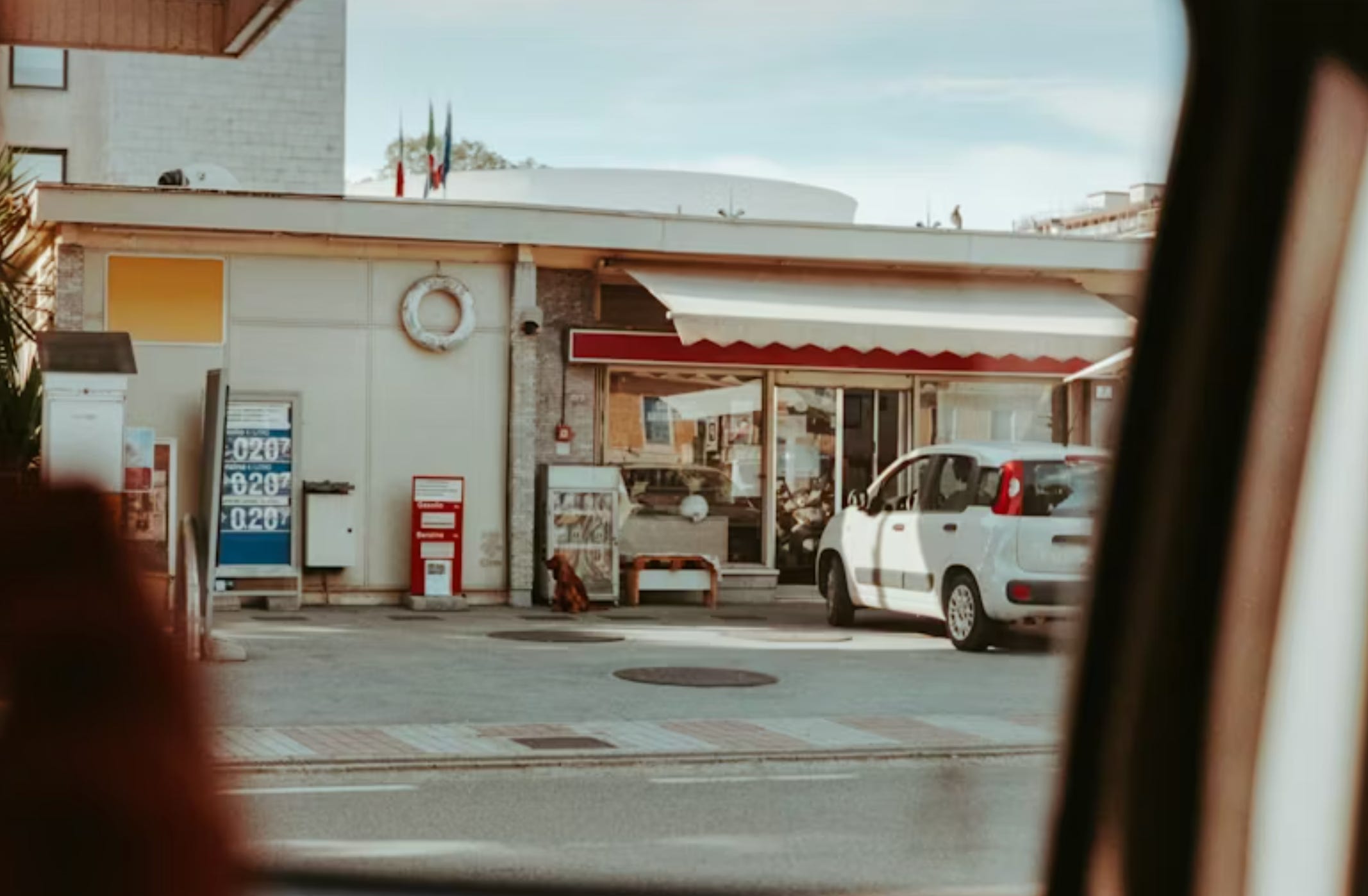
Rock stars sing of life lived in the fast lane; they shout that life is a highway best lived with the pedal down, the windows open, the music loud and blaring, the whole romantic mess of it. And maybe they’re right. But poets? They write about pit stops.
Nobody writes songs about pulling over.
About the yellow engine light you’ve been ignoring for forty miles.
About the slow hiss of a tire losing air on a road with no shoulder.
About sitting in some cramped, depressing fluorescent-lit waiting room while a mechanic delivers the bad news about your undercarriage.
But that’s where the living happens. Or at least where you find out how much living you’ve been doing.
Sometimes you just need a splash of gas. You’re running on fumes and you know it and the fix is simple: pull over, fill up, pull out.
Other times it’s an oil change. You’ve been running dirty for longer than you should have and everything is sluggish and grimed and you need someone to drain what’s gone bad.
Other times you have to get up on a jack and flip the hood and let someone rummage around inside you — hands where you’d rather they weren’t, finding things you’d rather they didn’t.
Other times still it’s a new engine or a new transmission or a new vehicle entirely. You walk into the shop one person and drive out another and the old model stays behind on the lot with the keys still in it. A sort of car of Theseus operation made real by a hefty bill and a different feel.
On this road there are long stretches of nothing and short stretches of something, but keep going and you’ll always find another stop there waiting.
The fast lane doesn’t have pit stops. Its long pretty white lines run uninterrupted. You stay in it by never stopping, and you stay in it until you can’t, and then, like many a better driver, you’re not in the fast lane anymore. You’re on the shoulder or in the ditch or out of the race altogether.
The winding road, though — the long and winding one that the Beatles wrote about and your mama warned you about and you ended up on anyway — that road is mostly pit stops. That road is built for them. It assumes you’ll need to pull over. It assumes that pedals will be smashed and engines will be revved and brakes will be slammed. It assumes your tires will go flat and your oil will gunk up and your wipers will streak the glass. It assumes all of this because it’s a road for cars that are actually being driven.
And when you finally pull into the great lot at the end — your engine ticking, frame a little rusted, odometer turned over more times than you can count — you won’t remember the stretches where you were flying. You’ll remember the stops.
The ones that kept you running.
The ones where kindness was given and laughter was shared and something in you shifted.
The ones where someone topped you off or tightened what was loose or told you the hard truth about your transmission.
You’ll remember them because they meant your pistons were firing and your tank still had some left and the road still waited for you somewhere just out there.
Per my about page, White Noise is a work of experimentation. I view it as a sort of thinking aloud, a stress testing of my nascent ideas. Through it, I hope to sharpen my opinions against the whetstone of other people’s feedback, commentary, and input.
If you want to discuss any of the ideas or musings mentioned above or have any books, papers, or links that you think would be interesting to share in a future edition of White Noise, please reach out to me by replying to this email or following me on X.
With sincere gratitude,
Tom
Quite a comforting & also ideas-stimultating metaphor for an oldie like me (84) embarking on her memoir - thank you!
Great stuff Tom. Nostalgia and smiling all way through a wonderful read. Thank you.