
Rick Rubin Is the Future of Work
How Is Dead. Long Live What.

If I don’t go into that office every day, who am I?
—Freddy Rumsen, Mad Men
What is the point of worrying oneself too much about what one could or could not have done to control the course one’s life took? Surely it is enough that the likes of you and I at least try to make our small contribution count for something true and worthy. And if some of us are prepared to sacrifice much in life in order to pursue such aspirations, surely that in itself, whatever the outcome, cause for pride and contentment.
—Kazuo Ishiguro, The Remains of the Day
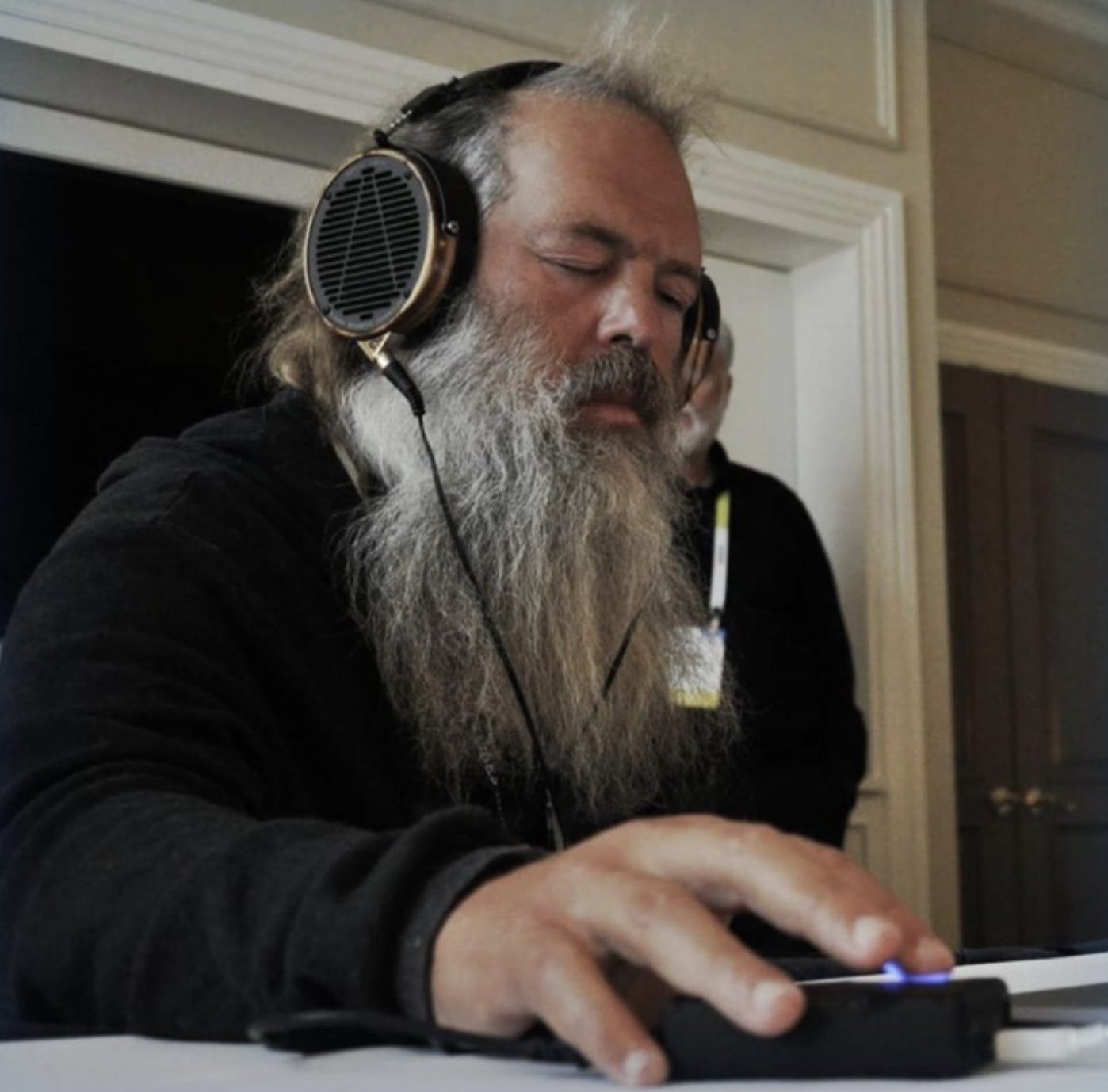
Above: America’s economic backbone, circa 2030.
Get a hobby, folks. And do so quickly.
I don’t mean that dismissively. I mean it with urgency.
Watch this.
A person types one sentence: “I’m the general manager of Joe’s Pizza, we’re thinking about opening a new location, advise us where.”
The machine:
Reads every business file.
Researches expansion locations across the DC metro area.
Builds a comparison matrix—rent, distance, demographics, growth ratings.
Generates a full financial projection with sensitivity analysis in Excel.
Then produces a polished PowerPoint with a timeline and a recommendation.
Research. Analysis. Output. All in one place. From a sentence.
That used to be a team. An analyst, a strategist, a designer, a project manager, and a few weeks of work. Now it’s just a sentence and a few minutes.
This is far from the tail end of an overblown hype cycle. This is the early, messy, expensive, embarrassing phase of exploring what becomes possible when the cost of a unit of cognitive work drops toward zero.
Put more simply, the gap between imagination and execution just disappeared; now the only limit is nerve.
So where does that leave us?
If AI eats the reading, writing, analyzing, deciding, connecting, and communicating through a keyboard that define traditional white collar work—if it does the heavy rowing (see: The Top Gun Theory of AI from 2024)—then what, exactly, is left for the person holding the tiller?
Watch this next clip and you’ll see.
Anderson Cooper asks the most prolific music producer alive what, exactly, he does in the studio. Rubin can’t play an instrument. He has no formal training, doesn’t read music, and never touches the boards.
His answer: I know what I like and what I don’t like, and I’m decisive about what I like and what I don’t like.
That’s it. That’s the whole job description of the man who produced Run-DMC, Johnny Cash, the Beastie Boys, Adele, Jay-Z, the Red Hot Chili Peppers, and Metallica.
He can’t do the how. He is the undisputed master of the what.
Unironically, Rick Rubin is the future of work.
Taste and touch—knowing what’s good, knowing what’s right, knowing what you want—evolve into essential, tactical skills that remain solely the privilege of the embodied once AI abstracts away everything else.
Rubin has been living in this future for decades. The rest of us are just arriving.
The most analogous example for this shift (pun very much intended) is the jump from the command line to the graphical user interface.
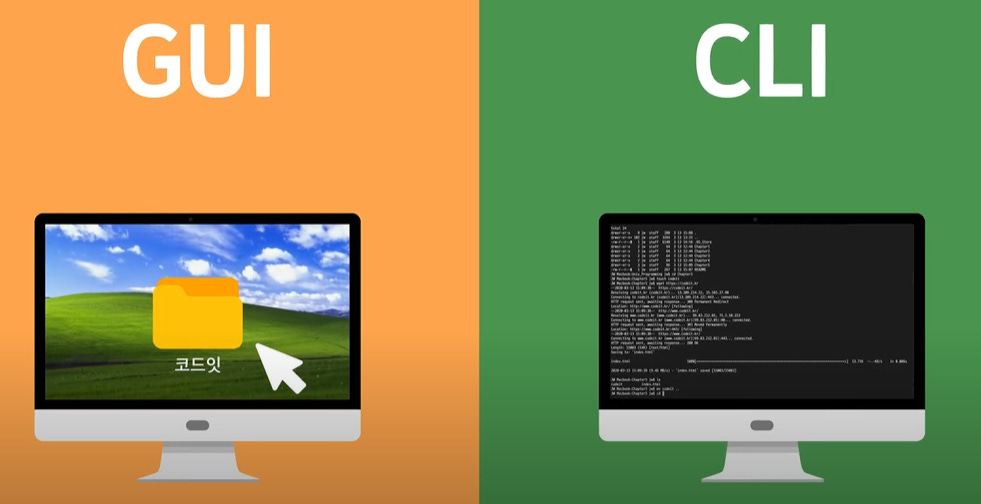
The Command-Line Interface required you to type precise commands, memorize specific syntax, and manage files via text on green-screen terminals.
Then came the GUI: Xerox Alto in the early 1970s, the Macintosh in the 1980s. Suddenly you could point and click. You didn’t need to speak the machine’s language anymore. The machine learned to speak yours.
That era gave us WYSIWYG—What You See Is What You Get.
What’s arriving now is something else entirely. What You Say Is What You Get.
In this brave new world, the how becomes incidental to the what.
That last line is not mine. It belongs to Alberto Romero, who has written what I consider the single best piece on this shift. It’s called “You Spent Your Whole Life Getting Good at the Wrong Thing,” and below I quote him at length because his thinking deserves the room.
On what happens when the how collapses:
The way I imagine the extreme case of this, which helps me visualize the core shift and remove the meaningless details, is like a genie lamp or a one-use teleporting device: Oh, look, a lamp. Can I ask a wish? But what do I wish for? What do I want from life? Or: if I had a device that could get me anywhere on the planet, where would I go? Where do I want to go if money, time, etc., were not a problem?
This comes down to the idea that you already know what your ideal life looks like, but you insist on not picturing it (out of fear, habit, etc.).
There are various forms of this: ‘If you had 10x more agency, what would you be doing right now?’ You know the answer, you just don’t imagine yourself as the person with 10x your agency and so you don’t become that person...
The idea of thinking about ‘single-use’ magical objects is that they invert the effort allocation 100%: the ‘how’ is fully outsourced. How does the genie get you a billion dollars? How does it make you extremely handsome? You don’t care, you don’t want to know. So, you automatically realize that your mental effort must now be fully devoted to the complementary question: what do you want?
This is, of course, an exaggeration of what AI does, but—and this is the fundamental insight—only in degree, not in kind. AI is the closest thing in the world to a genie lamp.
And then the part that should sting:
The belief that doing takes more resources than deciding what to do has been the default operating mode for basically all of human life. The how has always been so expensive that the what barely matters. You didn’t need to be good at wishing because you were never going to get most of what you wished for anyway. That’s why ‘default to action’ (vs planning or reflection) is such good advice. Now I’m not so sure...
And yet people are walking around with a genie’s lamp in one hand and a teleporting device in the pocket and still spending 99% of their time and effort and thoughts on the how.
The price of knowledge and wisdom is dropping to zero. You can no longer justify doing work you despise and use payment as a defense mechanism to slave away until kingdom come. The excuse structure that propped up the grind—I have to do this because I don’t know how to do that—is dissolving in real time.
The how was a prison. Most people never noticed because the walls were made of necessity. Now the walls are coming down, and people are standing in the open, blinking, unsure of where to walk.
Kierkegaard called the bone-deep anxiety this elicits the “dizziness of freedom.” It is the vertigo that comes not from having too few choices but from having too many—or, more precisely, from suddenly being responsible for choosing at all.
Part of why people are unsure of where to walk is that AI is severing the deepest identity loop in the Western world: who you are equals what you do for money.
The Protestant work ethic was a load-bearing wall for the Western psyche. We are dismantling it without a blueprint for what comes next.
For centuries, the equation was simple. You work. You earn. You are. Your job title was your identity. Your labor was your worth. Even if you hated the work, the paycheck justified the suffering—or at least made the suffering legible. You could point to it and say: This is what I do. Therefore, this is who I am.
But if the machines do the doing, then the doing can no longer define you. And if the doing can no longer define you, you have to find something else that does.
Like it or not, passion is about to be just as important as profit. No career is safe now, which means your healthy obsessions—those things that kindle your flame and stir your soul—are the only things that will carry you through.
The ancient world already knew this. The Bhagavad Gita, written roughly two millennia before anyone typed a line of code:
You have the right to work, but for the work’s sake only. You have no right to the fruits of work. Desire for the fruits of work must never be your motive in working. Never give way to laziness, either.
Perform every action with your heart fixed on the Supreme Lord. Renounce attachment to the fruits. Be even-tempered in success and failure: for it is this evenness of temper which is meant by yoga.
Work done with anxiety about results is far inferior to work done without such anxiety, in the calm of self-surrender. Seek refuge in the knowledge of Brahma. They who work selfishly for results are miserable.
And Friedrich Nietzsche, from the opposite end of every conceivable spectrum, arriving at the same destination:
Whoever wants to achieve something great must not seek to satisfy or please anyone but himself in his work: as soon as he fishes for the approval of others, it will not be anything great.
The work that matters is work done for its own sake. Not as a means to something else, but as an end in and of itself.
This has always been true. AI is forcing the issue by making it necessary.
Agency and internal motivation and work done for its own sake will rule the day, because you cannot outsource taste, you cannot automate desire, and you cannot delegate the question of what kind of life you want to live.
All this just to arrive back where I started: get a hobby.
I want to be precise about what I mean by that. I don’t mean inane idleness or the pursuit of pleasure above all else. I mean productive things done for joy or passion, properly ordered toward your telos—your purpose, your end—and thereby allowing for eudaimonia, the good life well-lived. The kind of life where you use the gifts you’ve been given rather than throwing them by the wayside in an existential fit of resignation.
The last competitive edge is doing things for their own sake.
Here is the virtuous cycle that most people have not yet noticed:
The more things you do for yourself—for pleasure, for curiosity, for the sheer joy of it—the more you discover what you actually like.
The more you discover what you like, the more you develop taste.
The more taste you develop, the better you become at identifying and doing good, tasteful things for their own sake.
Then you’re back at one, but higher up the spiral and better able to survey the lay of the land.
The cycle keeps spinning and accelerating. The person who knows what they want—who has spent years doing things not because they were paid to but because they couldn’t stop themselves—is building the only muscle that matters in a world where the how is free. They are developing taste, and taste, as Rubin demonstrates, is the whole ballgame.
If you need proof, look no further than what just happened in Milan.
Alysa Liu won her first national figure skating title at thirteen. By sixteen, she’d competed in the Olympics—and retired. She was burned out, miserable, done. The sport she loved had been hollowed out by obligation: other people telling her what to eat, what to wear, what to skate to. She threw her skates in a closet and walked away.
Two years later, she came back. But this time on her own terms, with a new goal: to have as much fun on the ice as possible. She chose her own coaches. Her own music. Her own choreography. She dyed her hair, got a lip piercing, and skated to Donna Summer. After her free skate, the first words out of her mouth were: “That was so much fun!”
She won Olympic gold, the first American woman to do so in twenty-four years.

Her story will prove prophetic. It is a proper preamble to what people will do, why they will do it, and how they will succeed in the age of AI.
Not by optimizing for optionality—that cult of keeping doors open that has dominated career discourse for far too long—but by doing the opposite. By closing doors. By choosing the one thing that makes you come alive, and going so deep into it that joy and intensity become indistinguishable. Liu won because she stopped optimizing and started wanting.
You can no longer afford not to love what you do. The things that are not means but ends—things done for their own sake—are the last things the machines cannot do for you, cannot take from you.
That, after all, is where the treasure is buried:
So here is the question I’ll leave you with. It is the question that every technological revolution eventually forces upon us, but that this one—because it touches not our hands but our minds—makes inescapable:
If you could do anything—if the how were handled, if the cost were zero, if the only constraint were your own imagination and will—what would you do?
Josef Pieper saw why most people flinch at that question:
Man seems to mistrust everything that is effortless; he can only enjoy, with a good conscience, what he has acquired with toil and trouble; he refuses to have anything as a gift.
Thanks to the terrifying miracle that is AI, today’s bottleneck is neither the tools nor the technology. It is the refusal to believe that you are allowed to want things.
But you can and you must, now more than ever.
Per Richard Feynman:
Fall in love with some activity, and do it! Nobody ever figures out what life is all about, and it doesn’t matter. Explore the world. Nearly everything is really interesting if you go into it deeply enough.
You know the answer to your own, personal what. You’ve always known. You just haven’t let yourself picture it.
Picture it. Then go do it.
The machines can handle all the rest.
Per my about page, White Noise is a work of experimentation. I view it as a sort of thinking aloud, a stress testing of my nascent ideas. Through it, I hope to sharpen my opinions against the whetstone of other people’s feedback, commentary, and input.
If you want to discuss any of the ideas or musings mentioned above or have any books, papers, or links that you think would be interesting to share in a future edition of White Noise, please reach out to me by replying to this email or following me on X.
With sincere gratitude,
Tom
Wow, that was a lot of responsibility laid on your average person. As an artist, I have experienced passion, the pressure of success, the burnout, worldly ambition, joy of working for myself, and utter disinterested periods of artist’s block. I think the most valuable part of work is to structure to our days and give discipline.. idle hands are the devil’s workshop and all that. The truth is that not everyone has a burning creative desire and Liu would not have won a medal without the previous years of forced practice.
Tom, this piece landed deeply. I've been building AI-powered tools for entrepreneurs in Central Illinois for the past nine months, and everything you've written here tracks with what I've been experiencing on the ground — not as theory but as daily lived reality.
Your Rick Rubin framing is perfect. The how IS dead. I've watched this happen in real time. I built a platform called DeSilo that automates the grunt work of being a startup entrepreneur — financial projections, resource discovery, strategic planning, email drafting, the works. Nine months ago this would have required a team, consultants, six-figure budgets. I built it as one person with AI tools and clear intent. The gap between imagination and execution didn't just shrink. It vanished.
But here's where I want to push your thesis further, because I think you're stopping one layer short of the most radical implication.
You frame this as "get a hobby" — develop taste, know what you want, become the Rick Rubin of your own life. That's right. But it still carries an implicit assumption that people need to consciously cultivate taste as a strategic response to AI. Like it's a new skill to be acquired. I think the truth is gentler and wilder than that.
I left a corporate engineering career at Caterpillar — 10-hour days, soul-sucking meetings, the full cubicle experience. For the first stretch after leaving, I didn't strategize about taste. I went to India for a couple months. I ate what I wanted. I watched movies. I started scribbling on my phone screen with a stylus because it felt good. Just my hand moving on glass. No plan, no portfolio, no "developing taste as a competitive advantage." Just the animal pleasure of making marks.
Over two and a half years, those scribbles became art that I genuinely love looking at. I started making music on Soundtrap — no training, no theory, pure instinct. One of my songs, a five-and-a-half-minute piece called Nava Jivitham ("New Life" in Kannada), still moves me every time I hear it. Not from narcissism — from recognition. It captured something I couldn't articulate any other way.
My point is this: taste isn't something you develop. It's something you uncover. It's already there. It's been there since before language, since before agriculture, since before civilization stacked its layers of obligation on top of the primal impulse to explore and create. Watch a three-year-old with a puddle. That's full absorption, zero self-monitoring. Nobody taught them that. The question isn't how to cultivate taste — it's what untaught it.
250,000 years of subsistence living. 4,000-5,000 years of aristocratic extraction where the vast majority of humans were locked into agricultural labor with no time, no energy, no permission to explore their own interiority. Then a few centuries of industrial and post-industrial work culture that told people their identity equals their job title. The Protestant work ethic wasn't just an ideology — it was a prison that most people never noticed because the walls were made of necessity. You said that beautifully.
But here's the part that makes me optimistic beyond anything your piece suggests: we have NEVER run the experiment of letting human beings go free. Not once in 300,000 years of Homo sapiens history. Every era has had some binding constraint — survival, tyranny, economic necessity, institutional gatekeeping. AI is dissolving the last of these constraints. When the base layer of human needs approaches free — when food, shelter, healthcare, education, legal services are abundant because AI has compressed their costs by orders of magnitude — we will be running an experiment that has no historical precedent.
Two days ago, a data engineer in Sydney with no biology degree used ChatGPT and AlphaFold to design a personalized mRNA cancer vaccine for his dog. Cost: $3,000. The tumor shrank 75%. The pharmaceutical industry equivalent costs $100,000-$300,000. That's not a hobby. That's intelligence democratized to the point where a man's love for his dog plus freely available AI tools can produce outcomes that previously required institutional research teams and millions in funding.
So my friendly challenge to you: I don't think people need to be told to "get a hobby." I think they need to be given breathing room — maybe a year, maybe five, maybe just a few months of not being crushed by survival pressure — and then the scribbling starts on its own. The hand reaches for the glass surface because it feels good. The ear finds the riff that holds the song together. The mind starts asking questions it was too exhausted to ask before. This isn't aspirational. It's biological. It's what consciousness does when you stop suffocating it.
The Gita says do the work for the work's sake. Nature says the same thing more quietly — every organism on this planet does exactly what it's built to do, in the most sublime and silent ways, without needing a Substack article to tell it to develop taste. We are the only species that forgot. AI is the thing that's going to help us remember.
Thank you for writing this. In a sea of AI doomerism and collapse narratives, your piece is a breath of fresh air. The how is dead. Long live the what. And long live the discovery that the what was inside us all along, waiting for permission to emerge.
— The Curious Nobody