

“Almost” carries no weight, especially in matters of the heart. And you did have a heart, didn’t you, Ebenezer?
—Charles Dickens, A Christmas Carol
A wonderful fact to reflect upon, that every human creature is constituted to be that profound secret and mystery to every other.
—Charles Dickens, A Tale of Two Cities
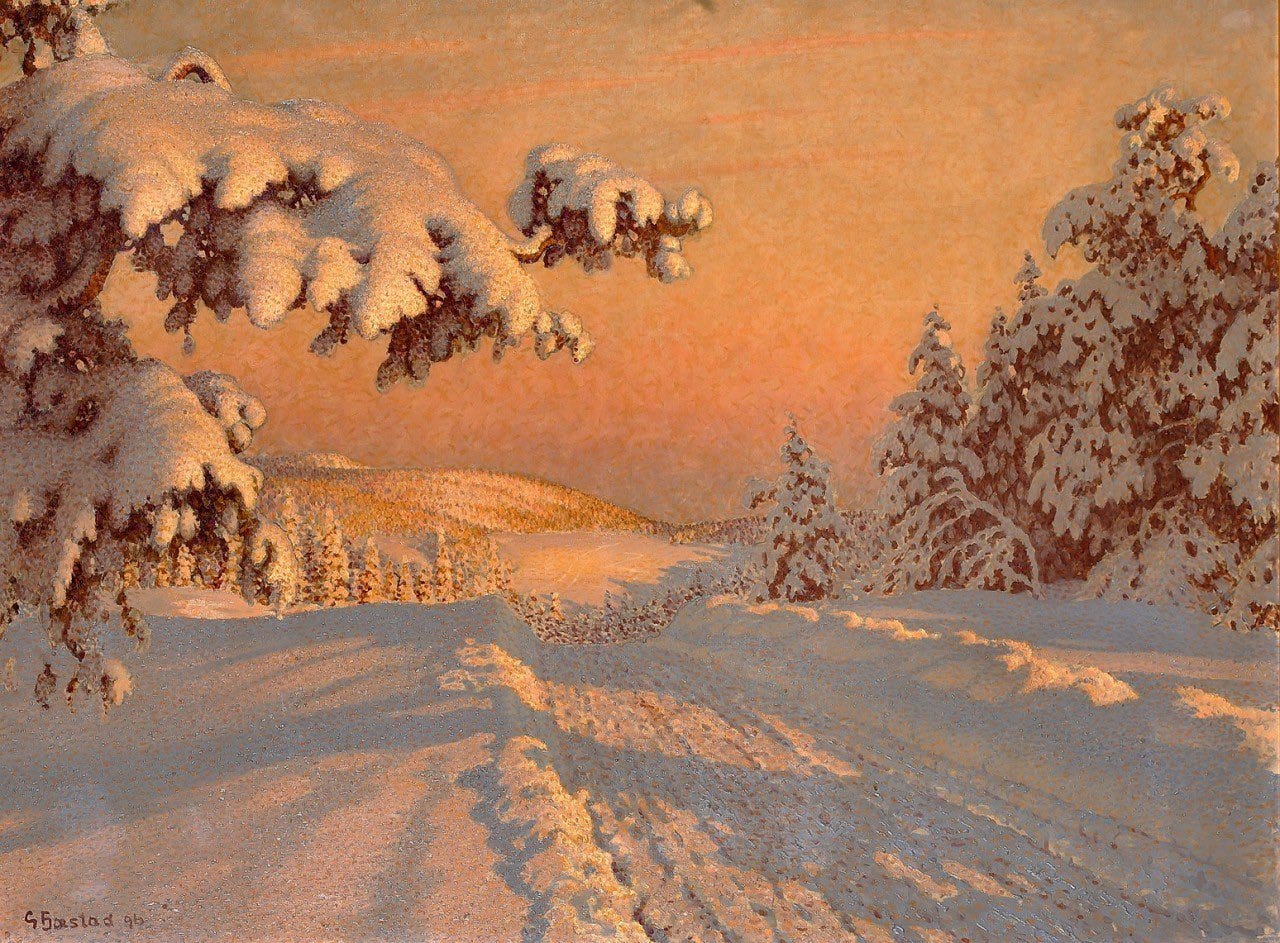
Above: Where there is light, there is warmth; even in the cold of winter.
I hope that your Christmas season has and continues to be, as Odysseus said of Alcinous’s banquet, “something like perfection.”
If it has, keep the momentum going.
If it has not, heed the wise words of St. Benedict: “Always we begin again.”
As we close yet another chapter in the books of our respective lives, I encourage you to enter this new year with the energy and enthusiasm that gratitude begets.
After all, in order to be great you must first be grateful. (They are made of the very same stuff—just look at the letters)
I am grateful to you, dear reader, and the thousands just like you that have read the ninety-six pieces I published during this, our most recent trip around the sun.
I hope that this is the year that you show up.
The year that you change your life for the better.
That you turn maybe into definitely.
That your someday becomes yesterday.
That idk becomes lfg.
That you stop asking if and start asking how.
After all, today—no, this very moment—is the youngest you will ever be. If not now, when?
Life is but a long, meandering path to death. The destination is certain though the journey is not.
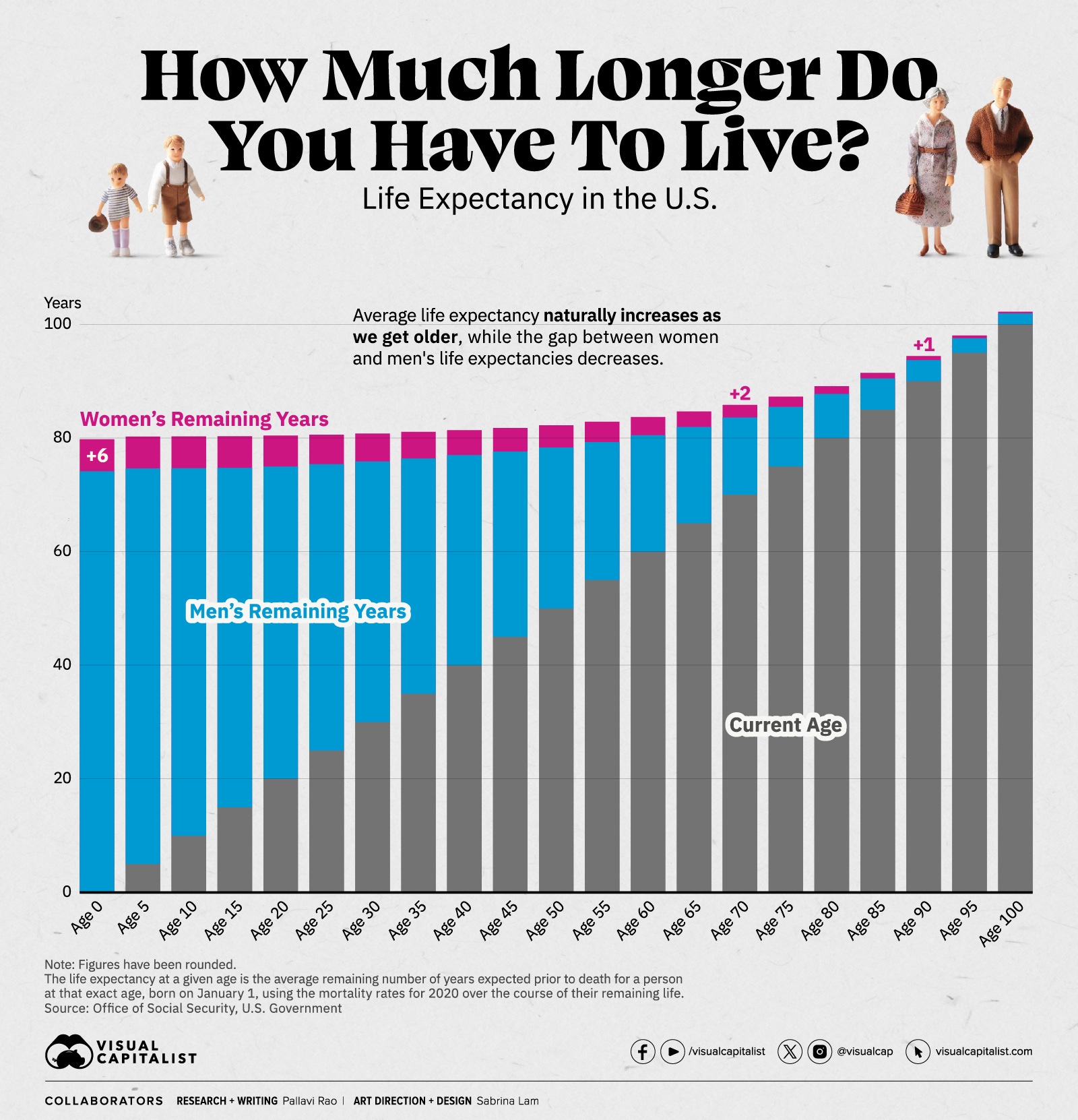
To that end, I pose one simple question: What do you want the most in 2026?
When answering, be specific and be precise,
When acting, be relentless and get after it.
Without further ado, below I share 2025’s five most read pieces alongside a favorite excerpt from each. I invite you to read any that speak to you in preparation for another year of learning and living and loving.
5)

Roman satirist Juvenal wrote:
Already long ago, from when we sold our vote to no man, the People have abdicated our duties; for the People who once upon a time handed out military command, high civil office, legions — everything, now restrains itself and anxiously hopes for just two things: bread and circuses.
What’s old is new again.
Two thousand years later, we have DoorDash and TikTok. Mission accomplished.
Look around: we’re six lanes wide on the information highway, engines revving, GPS screaming, yet the needle is barely moving.
We amuse ourselves to death, as Neil Postman predicted, but the tragedy is that we mistake this endless entertainment for living. We trade the possibility of deep work—of making something real and lasting—for fleeting digital applause. And we’re left hollow, restless, and angry without knowing why.
4)

Everything used to be bold, sharp, high-contrast, and then, as history lurched forward, the palette slid into grays, taupes, rental-apartment sage greens, and influencer-approved oatmeal.
These are two sides of the same coin.
Vibes is no more than ambiguous, emotional beige.
It’s a placeholder for thought. A verbal shrug. A smudge where a sentence should be.
It’s bringing a dull, plastic knife to a linguistic gunfight.
It’s perfectly designed for a world where meaning collapses into shareable mush.
It’s nonspecific enough to be universal, breezy enough to signal you’re in on the joke, and vague enough to avoid the discomfort of saying what you actually feel.
3)
Blood on the Quad: The Assassination of Charlie Kirk

The simple step of a courageous individual is not to take part in the lie. One word of truth outweighs the world. In keeping silent about evil, in burying it so deep within us that no sign of it appears on the surface, we are implanting it, and it will rise up a thousand fold in the future.
Fight Club prophesied the spiritual vacancy of late modern life:
We’re the middle children of history, man. No purpose or place. We have no Great War. No Great Depression. Our Great War’s a spiritual war... our Great Depression is our lives. We’ve all been raised on television to believe that one day we’d all be millionaires, and movie gods, and rock stars. But we won’t. And we’re slowly learning that fact. And we’re very, very pissed off.
We bought the toys and misplaced the telos. The shelves are full but our souls are empty.
“Nothing settles so stubbornly as work left undone.” And our civic work is massively undone: rebuilding trust, relearning persuasion, recommitting to procedural fairness, restraining our appetite for enemies. That list is heavy enough that we procrastinate as a nation. We doomscroll to avoid facing it. Then we wake up to a quad roped off with police tape and tell ourselves the story was written by extremists, not by each and every one of us.
2)
The Boomer Republic: How an Aging Elite Bankrupted the Future

The great defining event of the twenty-first century—one of the great defining events in human history—will occur in three decades, give or take, when the global population starts to decline. Once that decline begins, it will never end. We do not face the challenge of a population bomb but of a population bust.
So the young revolt, not with torches but with tone: sarcasm, irony, defiance. They meme their anger because there’s no policy lever for it. Forget inheriting the system; they want to incinerate it.
An African proverb says: “The child who is not embraced by the village will burn it down to feel its warmth.”
And the “burn it down” instinct is bipartisan. The Trump voter in West Virginia and the Mamdani voter in Queens are gambling on the same emotional logic: if the game is rigged, throw out the dealer and rip up the green felt.
Different ideologies with the same primal impulse: rage as realism, risk as religion.
1)
Lorem AIpsum

The poison was never forced — it was offered gently, until you forgot it was poison at all.
In the 1964 Supreme Court case Jacobellis v. Ohio, Justice Potter Stewart uttered six famous words that have lived in legal infamy: “I know it when I see it.”
Used to describe his threshold test for obscenity, Justice Stewart wrote:
I shall not today attempt further to define the kinds of material I understand to be embraced within that shorthand description, and perhaps I could never succeed in intelligibly doing so. But I know it when I see it, and the motion picture involved in this case is not that.
That’s how I feel about AI writing. Hard to define, impossible to pin down, but immediately recognizable. The sentences mimic meaning without ever quite meaning, well…anything.
I’ve spent my whole life attuned to tics. I suffer from Tourette syndrome. My body produces sudden jolts, shrugs, shouts—punctuation marks I never asked for. As a friend once wrote, “[It is] ‘the car alarm’ of neuropsychiatric disorders.”
And yet, I’ve also developed affectionate tics of my own choosing. Nearly every conversation I have with someone meaningful—friend, family, confidant, comrade—ends with five simple words: Love you and God bless.
These two things—Tourette and my so-called tics of love—make me unusually sensitive to the ways patterns shape how we experience language.
And AI has patterns, too.
Lastly, if you read just one more piece of mine for the rest of your life, make it Standing Firm.
Per my about page, White Noise is a work of experimentation. I view it as a sort of thinking aloud, a stress testing of my nascent ideas. Through it, I hope to sharpen my opinions against the whetstone of other people’s feedback, commentary, and input.
If you want to discuss any of the ideas or musings mentioned above or have any books, papers, or links that you think would be interesting to share on a future edition of White Noise, please reach out to me by replying to this email or following me on X.
With sincere gratitude,
Tom