

Ever more people today have the means to live, but no meaning to live for.
—Viktor Frankl
For most of human history, the hardest part of making something was making it. The gap between intention and execution was wide enough to spend a whole career inside. You could lose years learning a craft, mastering a tool, figuring out how to get the thing in your head out into the world. That gap was not only frustrating, but also useful. It meant you never had to answer the harder question underneath: What do you actually want to make?
The productivity industrial complex sold us on the idea that the gap was the enemy. Get faster. Get more efficient. Remove friction.
We bought it.
We optimized our mornings and automated our inboxes and stacked our tools until the distance between idea and execution was nearly zero.

Then AI closed it the rest of the way.
And now the cursor blinks. The tools are ready. The cost is nothing. The time is now. And an enormous number of people are discovering, for the first time, that they have nothing to say.
We spent decades training people to be efficient and zero time training them to be deliberate.
To sit with a question.
To want something specific enough to pursue and strange enough to be worth pursuing.
Friction was never just an obstacle. It was a hiding place. You could spend years learning the how and never have to confront the what.
The guitarist who fingers scales for a decade.
The writer who outlines systems for productivity instead of producing anything.
The founder who builds infrastructure before identifying a customer.
The how was hard enough to be the whole project. Nobody asked what it was for.
AI took the hiding place away and nothing replaced it.
No new structure emerged to tell people what to want. No algorithm, no framework, no five-step process. Just the question, sitting there, bare and unanswerable by anything except the person asking it.
I have written before that the how is dead, that the people who will thrive are the ones who already know what they want.

I believe that. But I also know what it sounds like to someone who has spent twenty years inside the how and never once looked up; it’s like being told to swim by someone standing on the shore.
The question is not new. It is the oldest one there is. What do I actually want to do with my life?
Not what can I do. Not what should I do according to the market or the algorithm or the career ladder. What do I want? What is worth the finite, unrepeatable hours I have left?
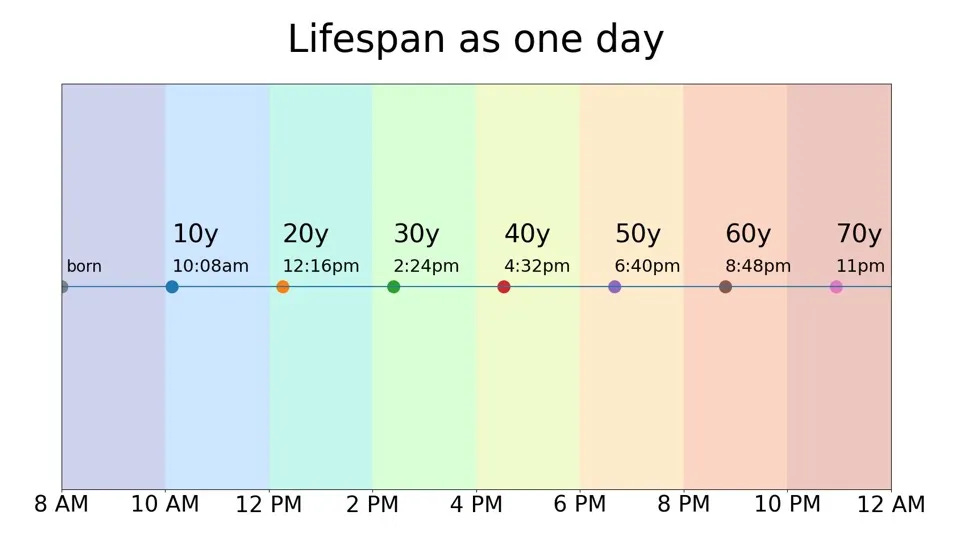
Most people have never been asked. The whole architecture of modern work was designed to make the question unnecessary.
You picked a major.
You took the job that paid well enough to stop thinking.
You stayed because staying was easier than choosing, and choosing was terrifying because it meant you might choose wrong, and choosing wrong meant the years you already spent were wasted, and so you kept going, and the question kept waiting.
AI did not create this problem, but it did remove the last thing standing between you and it.
There is no hack for this. No prompt. No tool that answers it for you. The only way through is the slow, unfashionable, deeply human work of sitting with yourself long enough to hear what you actually want underneath all the noise you built to avoid hearing it.
I once read that it’s easier to act your way into new ways of thinking than it is to think your way into new ways of acting. So act. Do something with your hands. Make something nobody asked for. Go toward what you are drawn to before you can explain why. The clarity comes after the motion, not before it.
Everyone else is sitting in front of the most powerful creative instrument ever built, waiting for it to tell them what to play.
Per my about page, White Noise is a work of experimentation. I view it as a sort of thinking aloud, a stress testing of my nascent ideas. Through it, I hope to sharpen my opinions against the whetstone of other people’s feedback, commentary, and input.
If you want to discuss any of the ideas or musings mentioned above or have any books, papers, or links that you think would be interesting to share in a future edition of White Noise, please reach out to me by replying to this email or following me on X.
With sincere gratitude,
Tom
Wow! Thank you for this. I need to sit with it and allow it to rest within me. Then I will read it again.
I kinda agree with the sentiment and the overall message, BUT: I don't know what kind of social circles you frequent, but most creative people I know (including me) start learning the "how" because they are absolutely sure about the "what", and yearning to do it.
And the thing is: the surety about the "what" will wither, die, and be reborn again and again through the countless hours of learning and doing the "how". It will get deeper, more nuanced, enriched by the experience of failures and happy accidents. It will turned around on its head because of stuff you never knew before.
It will also change each time you do the "how". This is the essence of the "what" - the process of bringing it to life. This is how great art announces itself. It doesn't come from the idea in your head. The idea might give you momentum, but in the end, it's the process that makes it into what it wants and ought to be.
You can sit for years in front of the blinking cursor, waiting for the "what", and it will never come, because the true "what" comes out of experience. This is the problem we are faced with. As a species, we are trying to outsource experience. And too many of us are excited about it, for my taste.
So yeah, your recent posts do read like words of someone who has never really gotten deep enough into "how" and hence, doesn't understand it, it's relationship to "what" and it's time-based dynamics. I don't know if that's true or not, but that's what it feels like.
Last but not least, what has actually prompted me to comment here: you really can't say AI costs nothing. It has taken, and it keep taking so much, on so many levels.
But again, I feel like awareness of this is connected to understanding the magic of the "how".