

Certain new theologians dispute original sin, which is the only part of Christian theology which can really be proved.
—G.K. Chesterton
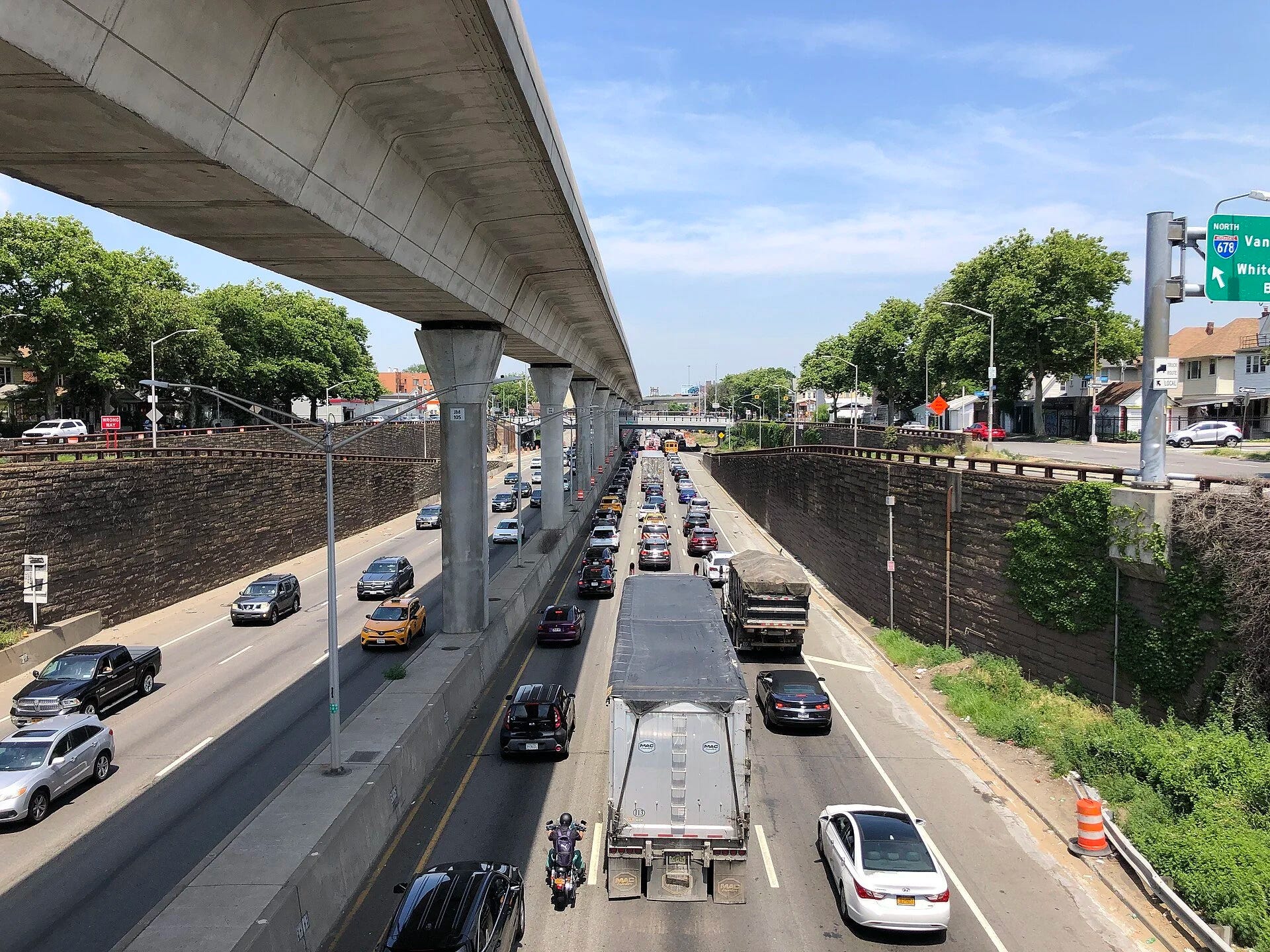
Above: Parking lot or parkway?
I drove up to Boston this past weekend for a little bit of lobster and a lot of hearty laughs. Escaping New York meant threading through Brooklyn’s choked latticework of side streets to reach the Van Wyck Expressway, which, in reality, is more of a prolonged pit stop than any sort of poetry in motion.
I have long maintained that if you can drive in New York City, you can drive anywhere. This is not because New York drivers are skilled in any way, shape, or form, (indeed, they are far from it), but rather because they are predictable in their unpredictability.
The yellow ones, as Buddy the Elf warned, don’t stop.
The guy in the Charger with the tinted windows will dip across three lanes without signaling.
You know, and you anticipate, all of this before you leave the driveway, so nothing surprises you.
Every driver’s ed course teaches the same doctrine: assume the other guy is about to do something stupid, and position yourself so that when he does, it costs you nothing. The assumption is almost never wrong and infinitely generalizable.
I have started applying the doctrine off the road. (Who knew driver’s ed would come in handy outside of the automobile?) Most disappointment results from the delta between what you expect will happen and what actually does.
I expect the colleague to read the memo.
I expect the girl to text me
I expect the contractor to call back.
Then I am both surprised and hurt when humanity performs exactly to spec.
The defensive driver avoids the collision because he has already made room for it. He has already forgiven the cab, which is what separates him from the cynic.
The cynic makes the same prediction and holds a grudge about it.
The optimist never makes the prediction and gets T-boned in the intersection.
The realist keeps the prediction and drops the grudge.
As it turns out, low expectations, carried sans bitterness or reservation, are a form of mercy. You stop grading people against a make-believe manual nobody has read or agreed to adhere to.
I would like to claim I am the exception. But I know for a fact I am somebody’s yellow cab. I am the reply that never came, the call I meant to return, the email draft that fell through the digital cracks. Someone out there has priced me in and made room, and their low expectations are probably the reason we are still friends.
This may well be the most reliable act of agape available: expecting nothing from one another, covering the difference, and loving them all the same.
Expect the stupidity and leave a very wide berth for it.
Give a little grace and get loads back in return.
There was traffic on the Van Wyck anyway.
Per my about page, White Noise is a work of experimentation. I view it as a sort of thinking aloud, a stress testing of my nascent ideas. Through it, I hope to sharpen my opinions against the whetstone of other people’s feedback, commentary, and input.
If you want to discuss any of the ideas or musings mentioned above or have any books, papers, or links that you think would be interesting to share in a future edition of White Noise, please reach out to me by replying to this email or following me on X.
With sincere gratitude,
Tom
I tend to live my life in this way but there is one exception. Having read this I have been educated as to why that person drives me incredibly bananas. No more. I will now expect even less from them than anyone else. Thanks for defining the cure I've been desperate for. Good read. Thank you, Tom.
Wow, Tom, you never failed to impress!😃
A couple of thoughts: since you were driving up to Boston, you were not really going to get lobster after all, rather, you were craving some lobstaaah, and whether it was a freeway, or a highway, or a parking lot, up in Maaaaasachusetts it had to be a paaahking lot. Of course, you had to bring back fond memories of Old Blue Eyes with the remark that if you can drive in New York, you can drive anywhere. I guess so. If I can make it there, I’ll make it anywhere… allegedly anyway. I had you pegged for a Notre Damer, through and through, but the Brooklyn Inya is just too powahhhful! 😃